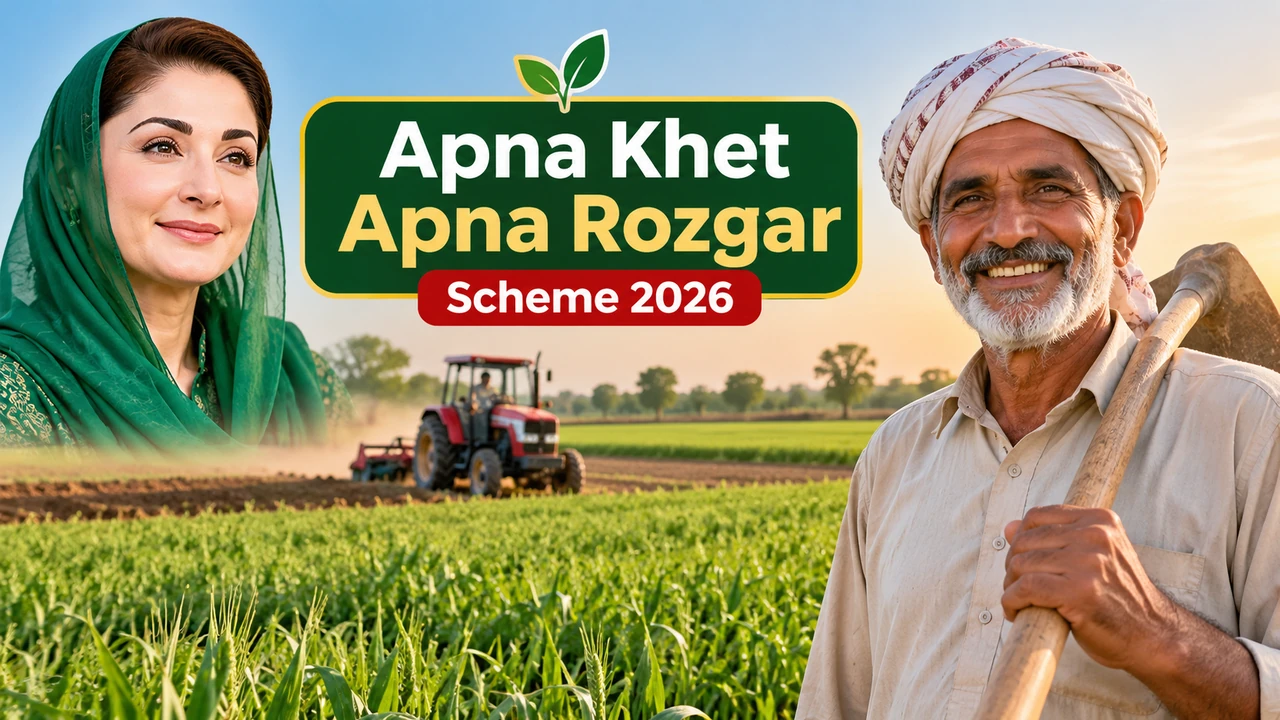
The Apna Khet Apna Rozgar Scheme 2026 helps landless Punjab families earn a living through farming. Eligible families can lease government land and receive assistance to prepare it for cultivation. The first round of selection has taken place, and successful applicants are receiving allotment letters.
Public registration for the first round is closed.
What Is the Apna Khet Apna Rozgar Scheme 2026?
This Punjab government initiative, introduced under Chief Minister Maryam Nawaz Sharif, supports deserving families who farm but own no agricultural land.
It lets families farm government-owned land instead of paying high rents to private landowners. Dawn reported its announcement on 4 February 2026, with around 250,000 acres planned for deserving people.
The land is offered on lease, not as permanent ownership, and beneficiaries must follow their lease conditions.
How Much Land and Financial Assistance Is Available?
APP reports say selected families may receive three to five acres of government land, at a reported annual rent of Rs100 per acre and Rs50,000 per acre in land-preparation assistance.
For example, four acres could mean Rs200,000 in support under the reported arrangement; confirm amount and terms officially.
The first-round plan covered 121,000 acres of cultivable government land for 30,000 landless families.
These are published reports, not a guarantee for future applicants.
Apna Khet Apna Rozgar Scheme Eligibility Criteria
Official remarks state the main requirement: applicants must not own agricultural land, and selection is merit-based, without political recommendations.
Applications underwent verification and security checks before selection.
Online guides also mention a Punjab domicile, valid CNIC, farming experience, and restrictions on government employees or loan defaulters, but verify these in an official notification.
Read the published eligibility rules for any new round.
How to Apply for the Scheme Online
Registration for round one is closed; wait for an official announcement before applying.
Websites mention a 2 to 18 May 2026 registration period, but verify the portal and details through the Punjab government or Land Records Authority.
The reported process was verification, computerized balloting, and allotment letters; first-round balloting took place on 6 July 2026.
Do not enter your CNIC details on an unverified website simply because it claims to offer scheme registration.
What Should Applicants Do Now?
If you applied but got no land, ask your district administration or Deputy Commissioner’s office about your status.
More families may be included in future phases, but no confirmed date is available.
To prepare for a possible new round:
Keep your CNIC valid and details accurate.
Check your land ownership records for errors.
Follow verified Punjab government announcements.
Check eligibility rules when a new notice appears.
Avoid paying agents who promise guaranteed selection.
Important Advice for Successful Beneficiaries
If you received an allotment letter, read your lease carefully: reports differ on 10 or 20 years, so check your lease certificate and district committee.
Keep your allotment letter, lease documents, and payment records safe, and ask the local agriculture department about farming guidance and permitted use of assistance.
Do not sell, transfer, or sublease without permission; follow the written lease conditions.
How to Avoid Scheme Scams
Beware anyone claiming to arrange land for money.
Never share CNIC information, OTPs, or banking details with unknown callers, and verify announcements through official government sources.
Frequently Asked Questions
Is the Apna Khet Apna Rozgar Scheme registration open?
No. Round one is closed, and no new date is confirmed.
How many acres can a family receive?
Three to five acres per family, under scheme rules and official decisions.
Is the agricultural land free?
No. It is a government land lease at a reported Rs100 per acre per year, not ownership.
How much financial assistance is provided?
A reported Rs50,000 per acre for land preparation; confirm amount and terms with authorities.
How long does the lease last?
Reports differ: 10 or 20 years. Check your lease certificate and district committee.
Will another registration round open?
More families may benefit in future phases, but no date is confirmed.
The scheme offers landless families a chance to farm through a government lease. Rely on official announcements and avoid anyone promising guaranteed allotment.